Moving Companies in Santa Rosa, CA
What You'll Actually Pay
If you're staying within about 50 miles of Santa Rosa, you're looking at an hourly rate plus a truck fee — usually $120 to $220 an hour for a two-person crew, averaging around $129. Add it all up and a same-city move usually lands somewhere between $390 and $4,100-plus, depending mostly on whether you're in a studio or a full four-bedroom house. Go long-distance, 50 miles or more, and the math changes completely: you're quoted on weight and distance instead of hours, and those moves typically run $1,890 to $12,600-plus.
The Extras Nobody Mentions Up Front
Most local outfits won't take a job under two or three hours, and they'll usually tack on travel time for the drive to and from your place. Got stairs or a long walk from the truck to your door? Expect that to cost extra too. Want help packing? Budget another $50 to $150 per room, plus whatever boxes and tape run you.
Don't Sign a Guess
A non-binding estimate is just that, a guess. If the job runs long, you're on the hook for more. Push for a binding, not-to-exceed number in writing instead, so the final price can't climb past what you agreed to.
Tell Them About Your Street
Santa Rosa's got plenty of tight residential pockets — narrow streets, historic blocks, apartments with restricted loading zones. A big 26-foot truck won't always fit down your driveway, and if it doesn't, you could get hit with a shuttle fee for transferring everything to a smaller vehicle. Mention it before moving day, not after the truck shows up.
Know What's Actually Covered
California requires movers to include basic liability coverage at no charge, but it doesn't amount to much, about $0.60 a pound per item. Drop a $1,000 TV weighing 30 pounds and they're on the hook for exactly $18. If that math bothers you, ask about Full Value Protection, or check whether your renter's or homeowner's policy already covers things in transit.
Pack Your Own "Don't Touch" Box
Keep your meds, important papers, chargers, a change of clothes, and anything valuable in your own car. Movers aren't allowed to load genuinely hazardous stuff — propane tanks and cans of paint that are already open, for instance — so that's one less thing to worry about, but you still don't want to be digging through taped boxes hunting for toilet paper on night one.
Check the License
Movers operating within California need a CAL-T number from the state Public Utilities Commission. It only takes a minute to verify, and it's the easiest way to rule out anyone shady before you hand over a deposit.
Once you've got the basics down, take a look at the movers listed below and start collecting real quotes to compare.
Free · no obligation
Quotes from movers in Santa Rosa, CA
Two answers below and we pass your move to licensed companies from this page. No account, no fee to you.
Filter & sort 1 Rating, reviews, fleet, licence
Best Movers in Santa Rosa, CA
Ranked by popularity. Licensing, insurance and photos shown for each.
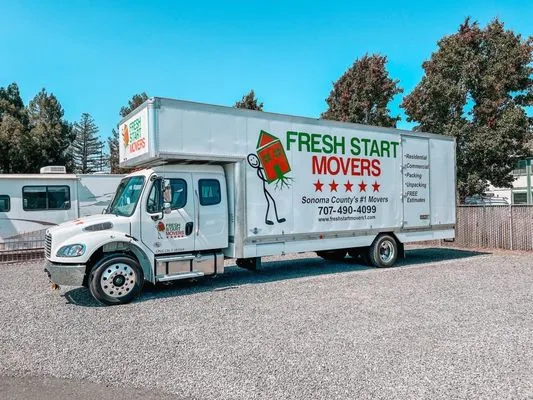
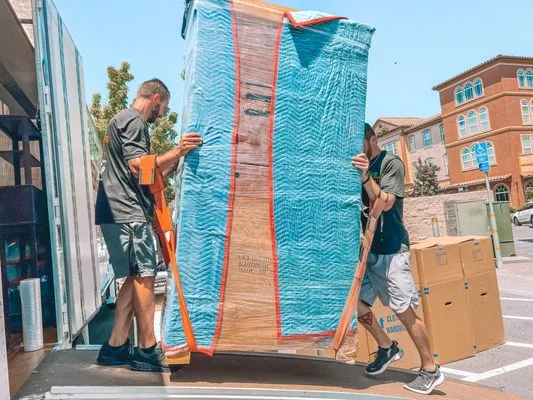
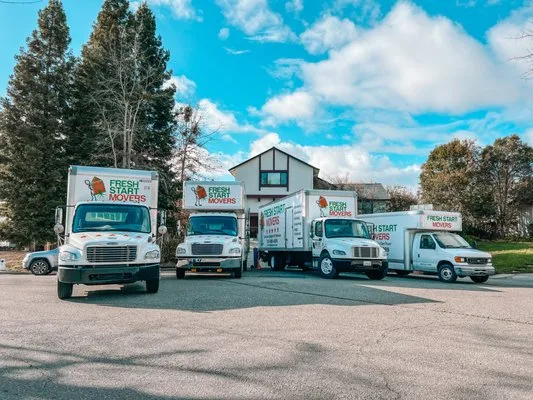
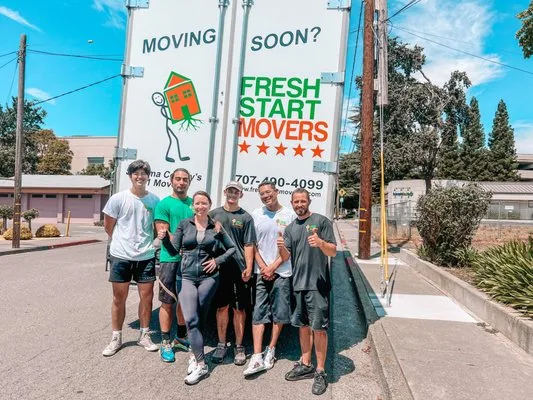




What customers say in Santa Rosa, CA
Who's moving to Santa Rosa, CA
Federal tax-filer migration data for Sonoma County.
71% arrived from elsewhere in California. Most arrivals are in-state moves, so a regional company will usually cover it — check interstate authority only if you're crossing a state line.
See licensed movers54% of departures went farther than 50 miles. Beyond that range moves are priced by weight and distance, and a state line means the carrier needs interstate authority.
See the full picture — 5-year trend, state flows and top routes
Each bar shows that state's in/out split — rows are ranked by total volume.
Households arriving from another state report $93,578 in average annual income; those relocating from elsewhere in California report $119,790. Long-distance arrivals are the higher-budget half of the market.
How this works: IRS SOI County-to-County Migration Data, 2022-2023. The IRS compares the address on consecutive tax returns, so every move here is a real filed household. The catch: it publishes annually with about a two-year lag, counts Sonoma County rather than city limits exactly, misses people who don't file a return, and leaves 25% of moves unattributed to a specific county, because flows too small to publish are grouped into regional buckets instead. See the whole state on the California migration page →
How much truck space do you need?
I’m moving a that’s .
Industry rules of thumb — about seven pounds per cubic foot, and published rental-truck capacities. Not our carrier records, not a quote. Bring both numbers to the call and what you get back will finally be comparable.